Most people who plateau on a calorie deficit aren’t eating too much.
They’re drinking it.
Not in a “you have a problem” way. In a completely normal, social, three-drinks-on-Friday way that adds up to 600 calories they never log, never account for, and never connect to the number on the scale that won’t budge.
This isn’t about telling you to stop drinking. It’s about showing you what’s actually happening — so you can make a real choice, not an uninformed one.
Why Alcohol Calories Are So Easy to Ignore
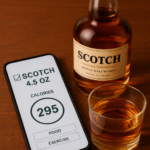 When you eat a burger, you know it’s a lot. You feel it. You log it.
When you drink two glasses of wine while cooking dinner, it feels like nothing. It is nothing — socially, emotionally, in terms of effort. But calorically? That’s 300 calories you consumed while standing at the kitchen counter barely noticing.
Alcohol has a few properties that make it uniquely invisible in a calorie budget.
It doesn’t feel like food. Your brain doesn’t register liquid calories the same way it registers solid food. Research consistently shows people underestimate beverage calories far more than food calories. You compensate for a cookie by eating less at dinner. You don’t compensate for wine the same way.
It’s attached to enjoyment, not eating. Drinks are social. They’re relaxation. They’re a reward. The mental category they live in is completely separate from “things I’m tracking” — which means they get a free pass most of the time.
The numbers are genuinely surprising. People have no intuitive sense of alcohol’s calorie density. They’re often shocked when they find out.
What a Weekend Actually Looks Like (In Calories)
Here’s a normal, not-excessive social weekend for a lot of people:
| What You Had | Calories |
|---|---|
| 2 glasses of red wine (Friday) | ~300 |
| 2 beers at a friend’s place (Saturday) | ~300–360 |
| A cocktail at dinner Saturday night | ~200–250 |
| A Bloody Mary Sunday brunch | ~200 |
| Total | ~1,000–1,100 calories |
That’s a full day’s worth of food — consumed across four casual social moments, probably not logged once.
If your calorie target is 1,800 per day and you hit it on food alone, you ended the week 1,000 calories over on days you thought were “fine.”
That’s why the scale doesn’t move.
The Calorie Count Nobody Tells You
Here’s a quick reference — no macros, just numbers.
Beer
- Light beer (12 oz): ~100 cal
- Regular beer (12 oz): ~150 cal
- IPA or craft beer (12 oz): ~200–250 cal
- Stout (12 oz): ~200+ cal
Wine
- White wine (5 oz pour): ~120 cal
- Red wine (5 oz pour): ~125 cal
- Prosecco (5 oz): ~100 cal
- Restaurant pour (often 6–7 oz): add 20–40 more
Spirits (1.5 oz shot, straight)
- Vodka, gin, rum, whiskey, tequila: ~95–105 cal
Cocktails (where it gets messy)
- Margarita: ~200–300 cal
- Rum & Coke: ~180 cal
- Mojito: ~200 cal
- Piña Colada: ~350–500 cal
- Aperol Spritz: ~125 cal
- Espresso Martini: ~250 cal
The spirit itself isn’t the problem. The mixers are. Juice, syrup, soda — that’s where the calories stack fast.
Alcohol Also Works Against You in a Second Way
Calories aside, alcohol temporarily pauses fat burning.
Your body treats alcohol as a mild toxin and prioritizes metabolizing it. While it’s doing that, fat oxidation slows down. Depending on how much you drank, that pause can last several hours.
This doesn’t mean a drink will ruin everything. It means the idea that you can drink freely and still be in a clean deficit is more complicated than it looks.
It also means the “I ate light all day to save room for drinks tonight” strategy doesn’t work as well as people hope — you arrive with lower blood sugar, feel the drinks faster, and often eat more after.
How to Actually Track Alcohol (Without Overthinking It)
The goal isn’t perfection. It’s awareness.
Option 1: Log it like any other food. Most calorie apps have alcohol entries. Search the drink, pick the closest match, log it. It takes 15 seconds and keeps your day honest.
Option 2: Use a rough budget. Decide before you go out: “I’m budgeting 400 calories for drinks tonight.” Two light beers, or two glasses of wine, or one cocktail and one beer — roughly 400 calories. Getting close is infinitely better than ignoring it completely.
Option 3: Eat slightly less earlier. If you know you’re drinking Saturday night, eat 300–400 calories lighter during the day. You won’t be perfectly accurate, but you’ll be far better off than treating drinks as free calories.
What not to do: Decide that because alcohol is hard to track precisely, you won’t track it at all. That’s how 1,000 calories a week disappears without a trace.
Smarter Choices Without Quitting Your Social Life
You don’t have to stop drinking to lose weight. You just have to stop pretending drinks don’t count.
A few swaps that cost less without killing the vibe:
- Wine or light beer over cocktails. Cocktails are delicious and calorie-dense. Wine and light beer are predictable and lower.
- Spirits with soda water instead of juice or soda. Vodka soda: ~100 calories. Vodka cranberry: ~200. Same drink, different mixer.
- Drink slower. One drink over two hours is very different from three drinks in the same window — in calories and in the decisions you make afterward.
- Eat a real meal before drinking. You’ll drink less, eat less late, and feel better the next day.
- Pick your nights. Knowing the cost lets you decide when it’s worth it.
The Bottom Line
Calorie tracking works. The reason it doesn’t work for a lot of people is that they’re tracking most of their calories — not all of them.
Alcohol is the gap.
You don’t have to give it up. You don’t have to stress about it. You just have to count it like everything else — because it is like everything else. Energy in, whether it came from a plate or a glass.
Log the drinks. Hit your number. Keep going.
That’s it.
Calories.Today is simple calorie tracking — no macros, no meal plans, no stress. Try it free →