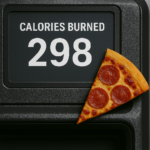
 You went to the gym. An hour on the treadmill. The machine says 300 calories.
You feel like you earned something. Maybe a bigger dinner. Maybe dessert. You definitely feel like today is a win.
Here’s the uncomfortable truth: that workout barely moved your calorie balance — and the way most people respond to it actually puts them further behind.
The Math Nobody Wants to See
A pound of fat is roughly 3,500 calories.
That 300-calorie gym session? You’d need to do it 11 times — with no change in eating — to lose a single pound.
That’s almost two full weeks of daily workouts just to drop one pound. Meanwhile, skipping one large fast food meal saves you the same amount in a single decision that took 30 seconds.
This isn’t a reason to skip the gym. It’s a reason to stop treating it like a free pass.
Why Exercise Makes Calorie Tracking Harder
Here’s what actually happens for most people after a workout:
- You feel like you “earned” more food. Studies consistently show people eat more after exercise — often more than they burned.
- You move less for the rest of the day. Your body quietly compensates. After a hard session, you sit more, fidget less, skip the stairs. Researchers call this exercise compensation — and it’s automatic.
- The calorie count on the machine is wrong anyway. Treadmills and fitness trackers overestimate burn by 20–90%. That “300 calories” could easily be 180.
The result: many people who add exercise without tracking calories end up gaining weight, or stalling completely.
What Actually Moves the Needle
If exercise isn’t the answer, what is?
Your daily calorie intake is the answer. Always has been.
Exercise supports weight loss in a supporting role:
- It preserves muscle while you’re in a deficit
- It improves mood, which helps you stay consistent
- It has enormous long-term health benefits unrelated to weight
But it is not a weight loss engine. Your fork is.
The people who lose weight and keep it off aren’t burning it off at the gym. They’re eating slightly less, consistently, over time — and they’ve stopped thinking of workouts as calorie credits.
The Hidden Calorie Burner You’re Ignoring
Here’s something most gym-goers don’t know: NEAT — Non-Exercise Activity Thermogenesis — is often a bigger calorie factor than your workouts.
NEAT is everything that isn’t formal exercise:
- Walking to your car
- Fidgeting
- Taking the stairs
- Doing dishes
- Pacing on a phone call
For active people, NEAT can account for 300–500+ calories per day — without a single gym session. A daily 20-minute walk burns more over a week than most people think, and it doesn’t trigger the hunger and compensation response that hard exercise does.
If you want to increase your calorie burn without derailing your intake: move more throughout the day, not just during scheduled workouts.
What to Do Instead
None of this means quit the gym. It means stop using the gym to justify eating more.
The simple shift:
- Track your calories as if you didn’t work out
- Let exercise be a health habit, not a calorie bank
- Add low-intensity movement throughout your day (walks, standing, stairs)
- Trust the deficit — it works without the math feeling dramatic
You don’t need to earn food. You need a modest, consistent calorie deficit. That’s it.
The Bottom Line
Exercise is valuable. But 300 calories burned in the gym is easy to erase with one untracked snack, one larger-than-usual dinner, or one afternoon of sitting still to “recover.”
The people who make real progress aren’t grinding harder at the gym. They’re quietly, consistently tracking what they eat — and not letting a good workout become an excuse to blow their day.
Your workouts are for your health. Your calorie tracking is for your weight. Keep them in separate lanes.
Calories.Today tracks just calories — no macros, no meal plans, no fluff. Try it free →